




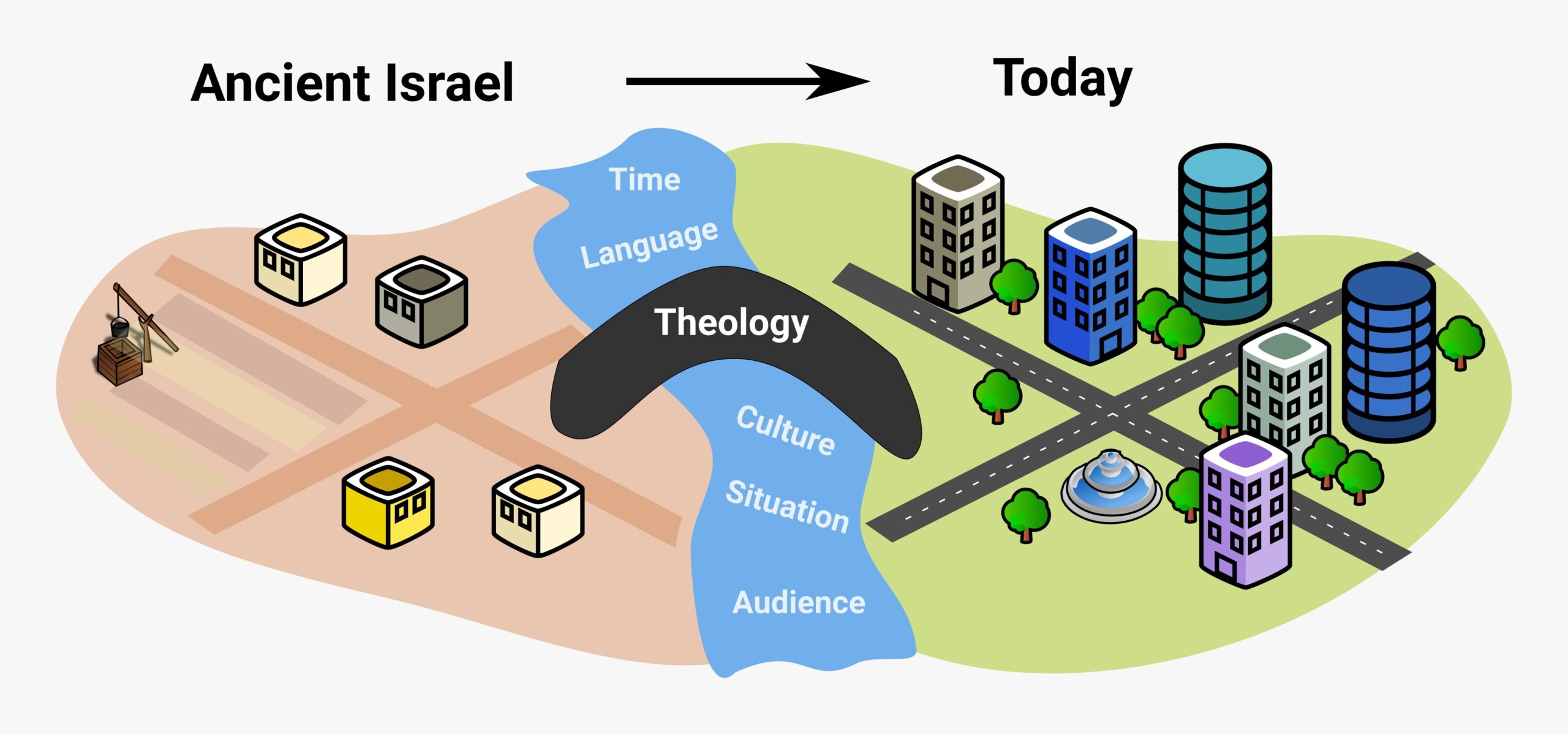
Contextual theology emerged as an important corrective to Eurocentric theological frameworks that often marginalised non-Western cultures and experiences.
At its best, contextual theology seeks to communicate the gospel meaningfully within diverse cultural, political, and social realities.
Yet this article argues that contextual theology becomes dangerous when context ceases to be the setting of theology and instead becomes its source.
When culture replaces Scripture as the final authority, theology is no longer shaped by divine revelation but by human ideology.
The Necessity — and Danger — of Contextual Theology
The article acknowledges that contextual theology plays a vital role in resisting theological imperialism and helping local communities hear the gospel within their own cultural settings.
Christianity has always required translation:
- linguistically,
- culturally,
- socially,
- and pastorally.
But contextualisation becomes distorted when:
- experience,
- politics,
- identity,
- or cultural consensus
begin to override the authority of Scripture.
The central concern of the article is therefore not contextual theology itself, but the loss of theological boundaries.
Scripture and the Source of Theology
The paper strongly grounds theology in the sufficiency of Scripture.
Drawing upon 2 Timothy 3:16–17, the article argues that theology must remain anchored in God’s revealed Word rather than shifting cultural pressures.
When authority shifts:
- from Scripture to culture,
- from revelation to ideology,
- from canon to consensus,
the result is theological distortion and eventually idolatry.
The article warns that many contemporary theological trends increasingly allow:
- identity politics,
- social movements,
- and cultural affirmation
to shape doctrine more than Scripture itself.
A Historical Warning: The German Church
The paper points to the German Church during the rise of Nazism as a sobering historical example.
In the 1930s, many theologians subordinated biblical truth to political ideology:
- removing references to Israel,
- suppressing Jesus’ Jewish identity,
- and adapting Christianity to nationalistic priorities.
The Confessing Church responded with the Barmen Declaration, insisting that Jesus Christ — as revealed in Scripture — remains the Church’s sole authority.
The lesson remains clear:
Faithful theology begins and ends with Scripture, not the spirit of the age.
Contemporary Distortions of Contextual Theology
The article identifies several modern forms of distorted contextual theology.
The Prosperity Gospel
In many contexts across Africa and Latin America, the Prosperity Gospel reflects what the paper describes as a hyper-capitalist form of contextual theology.
Here:
- divine blessing becomes equated with wealth,
- grace becomes commodified,
- and faith becomes transactional rather than relational.
The theology selectively emphasises texts about prosperity while neglecting:
- suffering,
- sacrifice,
- and God’s sustaining grace in weakness.
The result is a gospel shaped more by consumerism than by the cross.
LGBTQ+ Affirming Theology
The article also critiques certain Western contextual theologies that reinterpret Scripture to align with contemporary understandings of sexuality and identity.
The concern raised is methodological:
When modern anthropology becomes the interpretive framework for Scripture, experience effectively functions as a new canon.
The article argues that faithful contextualisation does not require the Church to mirror dominant culture, but to prophetically engage and challenge it through God’s Word.
Nationalist and Identitarian Theologies
Christian nationalism is presented as another example of distorted contextual theology.
The article argues that movements which merge:
- Christianity,
- ethnicity,
- political ideology,
- and national myth
subordinate the catholicity of the Church to cultural identity.
Rather than confronting empire prophetically, such theologies often sanctify it.
This obscures the transnational and multi-ethnic nature of the gospel itself.
Contextual Theology in South Africa and the United Kingdom
The article offers reflections on contextual theology within both South Africa and the UK.
South Africa
The Kairos Document is highlighted as an example of prophetic contextual theology rooted in Scripture during apartheid.
Yet the article warns that post-apartheid theology sometimes risks exchanging prophetic witness for political accommodation and cultural comfort.
The Church must therefore continue confronting:
- corruption,
- inequality,
- and moral compromise,
without surrendering its theological integrity.
The United Kingdom
In the UK, contextual theology increasingly interacts with:
- secularism,
- pluralism,
- multiculturalism,
- and progressive ethics.
While interfaith sensitivity and cultural awareness are valuable, the article argues that theological accommodation can sometimes weaken evangelistic clarity and doctrinal boundaries.
The danger is that pastoral concern becomes detached from biblical ontology.
Theology in the Digital Age
The article also addresses the impact of digital culture upon theology itself.
Digital platforms:
- democratise theological voices,
- accelerate influence,
- and amplify new perspectives.
Yet they also create:
- echo chambers,
- influencer-driven theology,
- anti-institutionalism,
- and fragmented doctrinal formation.
Movements such as online “deconstruction” often emerge from genuine pain and trauma, but can drift toward doctrinal nihilism when severed from Scripture and ecclesial tradition.
Technology therefore does not merely distribute theology.
It shapes theological imagination itself.
Reclaiming Faithful Contextualisation
The article concludes by proposing a constructive framework for faithful contextual theology.
Faithful contextual theology must remain:
Canonically Anchored
Scripture must remain the Church’s final authority.
Pneumatologically Guided
The Holy Spirit must guide discernment and application.
Historically Rooted
Theology must remain connected to the wisdom and continuity of the historic Church.
Communally Discerned
Theology must emerge within the life of the Body of Christ rather than isolated individualism.
The article further emphasises a classic Reformed principle:
The Spirit and the Word must never be separated.
Without the Spirit, theology becomes cold legalism.
Without the Word, theology dissolves into cultural mysticism.
Conclusion
Contextual theology remains both necessary and dangerous.
When grounded in Scripture and guided by the Holy Spirit, it allows the gospel to speak faithfully across every culture, language, and people group.
But when culture becomes the governing authority, theology increasingly reflects human desires rather than divine revelation.
The Church’s task is therefore not to reject contextual theology altogether.
Rather, it must discipline it:
ensuring that every context bows before the authority of God’s Word and that Christ — not culture — remains Lord.
Author
Brendon Naicker is a theologian, author, and teacher whose work explores theology, culture, discipleship, and the challenges facing the global Church in the modern world. His writing frequently engages questions surrounding biblical authority, contextual theology, digital culture, and faithful Christian witness across diverse cultural settings.