
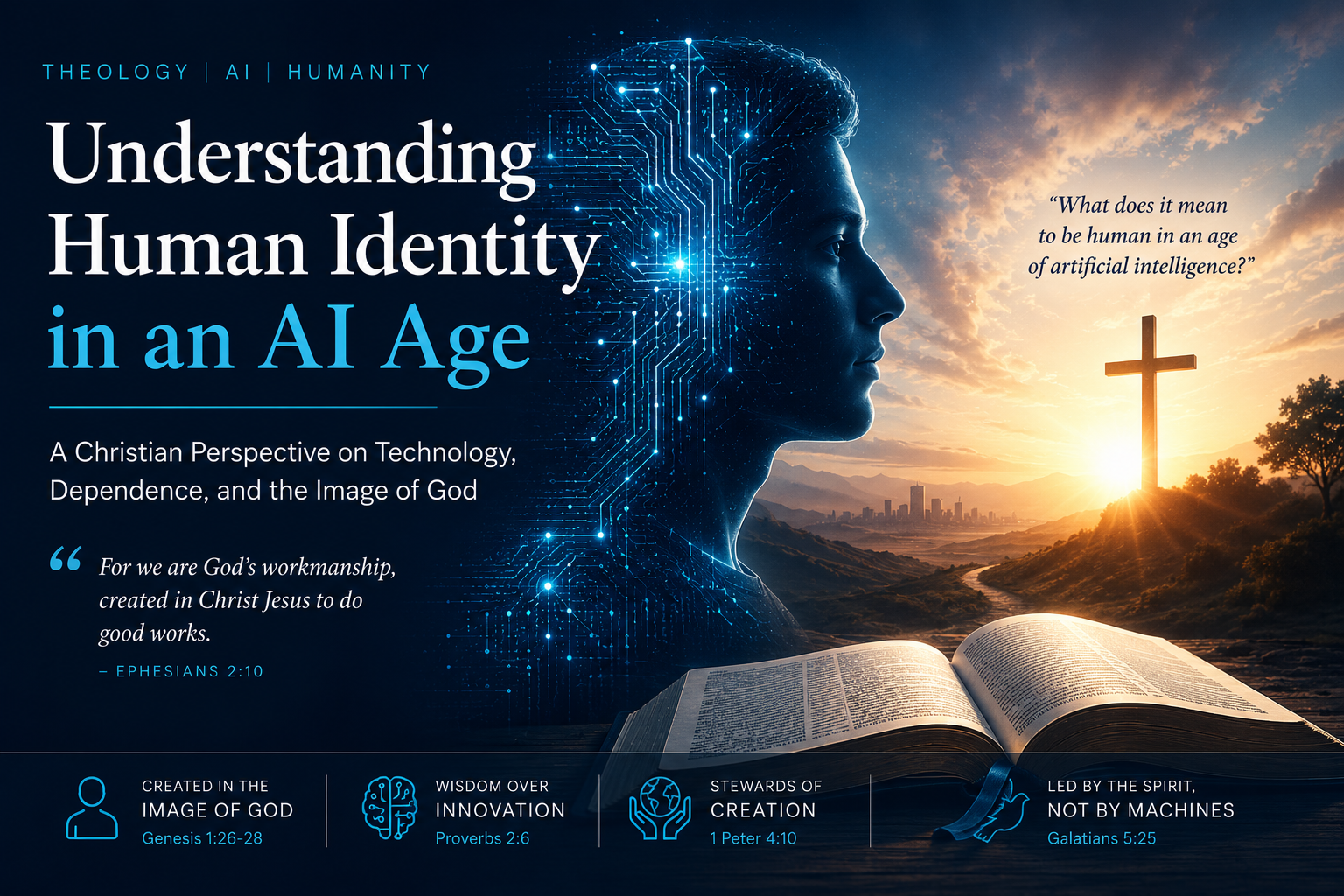
Understanding Human Identity in an AI Age
Artificial intelligence is challenging traditional understandings of what it means to be human. As people increasingly interact with intelligent systems, Christians must ask deeper questions about identity, dependence, spiritual discernment, and what it means to be created in the image of God.
This article reflects on AI and technology through a Christian theological perspective, drawing upon the concepts of “prosthetic existence,” technological dependence, and the ethical responsibilities believers must uphold in the digital age.
Technology and Human Dependence
Human beings have always used tools to extend their abilities. Susanna Lindberg describes this as “prosthetic existence,” the idea that technology has long been part of human life and development.
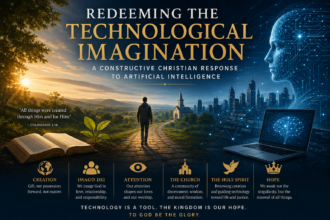
From a Christian perspective, human creativity and intelligence are gifts from God, given for stewardship, growth, and service. Yet technology must never be allowed to redefine human identity or replace dependence upon the Creator.
AI and the Danger of Dependency
Bernard Stiegler warns that excessive technological dependence may weaken human thought, wisdom, and decision-making. His concept of “artificial stupidity” cautions against relying so heavily on technology that discernment is diminished.
For Christians, this concern is especially important. AI may assist life, work, and learning, but it must never replace prayer, wisdom, Scripture, or dependence on the guidance of the Holy Spirit.
Faith and Technology
Technology is never merely neutral. It shapes how people think, relate, and understand themselves.
Christians are therefore called to use technology in ways that reflect God’s purposes:
- compassion,
- stewardship,
- creativity,
- wisdom,
- and service.
Technology should serve God’s creation rather than reshape human values or identity.
Preserving the Imago Dei
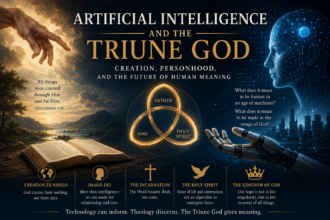
As the boundary between human and machine becomes increasingly blurred, the Church must continue affirming that human dignity is rooted not in technological capacity, productivity, or intelligence, but in being created in the image of God.
The key question is not simply what AI can do, but what AI does to our understanding of humanity.
Conclusion
The rise of artificial intelligence calls Christians to engage technology thoughtfully, spiritually, and theologically. AI may be useful, but it must remain a tool rather than a master.
Human identity is not found in machines, systems, or technological enhancement. It is found in God’s creative purpose, the image of God, and life lived in dependence upon Him.
Author
Brendon Naicker is a theologian, author, and teacher whose work explores theology, artificial intelligence, Christian anthropology, discipleship, and the challenges of digital culture.