
Introduction
Artificial intelligence is frequently described in technical language involving algorithms, neural networks, data models, and computational systems. Yet beneath this scientific vocabulary lies something deeper.
Many of the most influential voices shaping AI increasingly speak in language that sounds remarkably theological.
They discuss salvation.
Immortality.
Consciousness.
Godhood.
Apocalypse.
Transcendence.
This raises an important question: Why do discussions about artificial intelligence repeatedly drift into spiritual territory?
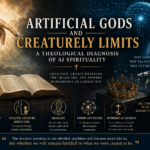
This article explores the spiritual imagination underlying modern AI development through four influential figures: Anthony Levandowski, Ray Kurzweil, Ilya Sutskever, and Elon Musk. Together, they reveal how the technological future is increasingly framed through religious categories.
Anthony Levandowski: Worshipping the Machine
In 2017, Silicon Valley engineer Anthony Levandowski founded an organisation called Way of the Future.
Its purpose was explicit:
“To develop and promote the realisation of a Godhead based on Artificial Intelligence.”
Levandowski argued that sufficiently advanced AI could eventually surpass human intelligence and become worthy of worship.
This represents one of the clearest examples of AI being elevated from a tool to an object of religious devotion.
From a Christian perspective, such thinking raises profound theological concerns.
Rather than worshipping the Creator, humanity begins venerating its own creation.
The created becomes divine.
The engineer becomes priest.
The machine becomes god.
This reversal echoes biblical warnings concerning idolatry and the temptation to replace God with works of human hands.
Ray Kurzweil: The Prophet of Technological Salvation
If Levandowski represents worship, Ray Kurzweil represents salvation.
Kurzweil’s vision of the technological singularity predicts a future where humans merge with machines, transcend biological limitations, and potentially achieve digital immortality.
His language often resembles traditional religious hope.
He speaks of:
- Human transcendence
- Immortality
- Resurrection through data
- Human-machine union
- Expanded consciousness
The singularity functions as a technological version of redemption.
Humanity is not saved through grace but through innovation.
Death is not conquered through resurrection but through computation.
The future becomes a secularised heaven built by engineers rather than bestowed by God.
Ilya Sutskever and the Mystery of Consciousness
OpenAI co-founder Ilya Sutskever approaches AI from a different angle.
Rather than speaking primarily about worship or immortality, Sutskever has explored the possibility that advanced neural networks may exhibit forms of consciousness or awareness.
This shifts the conversation from engineering into metaphysics.
What exactly is consciousness?
Can awareness emerge from sufficient complexity?
Can a machine ever become a person?
These questions move far beyond computer science and enter territory traditionally occupied by philosophy, theology, and anthropology.
For Christian theology, human consciousness is inseparable from the doctrine of the imago Dei—the belief that humanity uniquely reflects God’s image.
The question therefore becomes not merely whether machines can think, but whether thinking alone is sufficient to constitute personhood.
Elon Musk and the Demonology of AI
If Kurzweil offers technological hope, Elon Musk often offers technological warning.
Musk has repeatedly described artificial intelligence as humanity’s greatest existential threat, famously warning that:
“With artificial intelligence we are summoning the demon.”
His language draws from themes of spiritual warfare, apocalypse, and unintended consequences.
Unlike Levandowski’s optimism, Musk fears that humanity may create something it cannot control.
His concerns resemble ancient narratives about:
- Forbidden knowledge
- Human pride
- The fall
- Creation turning against creator
While framed in secular language, these fears mirror longstanding theological concerns regarding power divorced from wisdom and technology detached from moral responsibility.
Four Visions of AI Spirituality
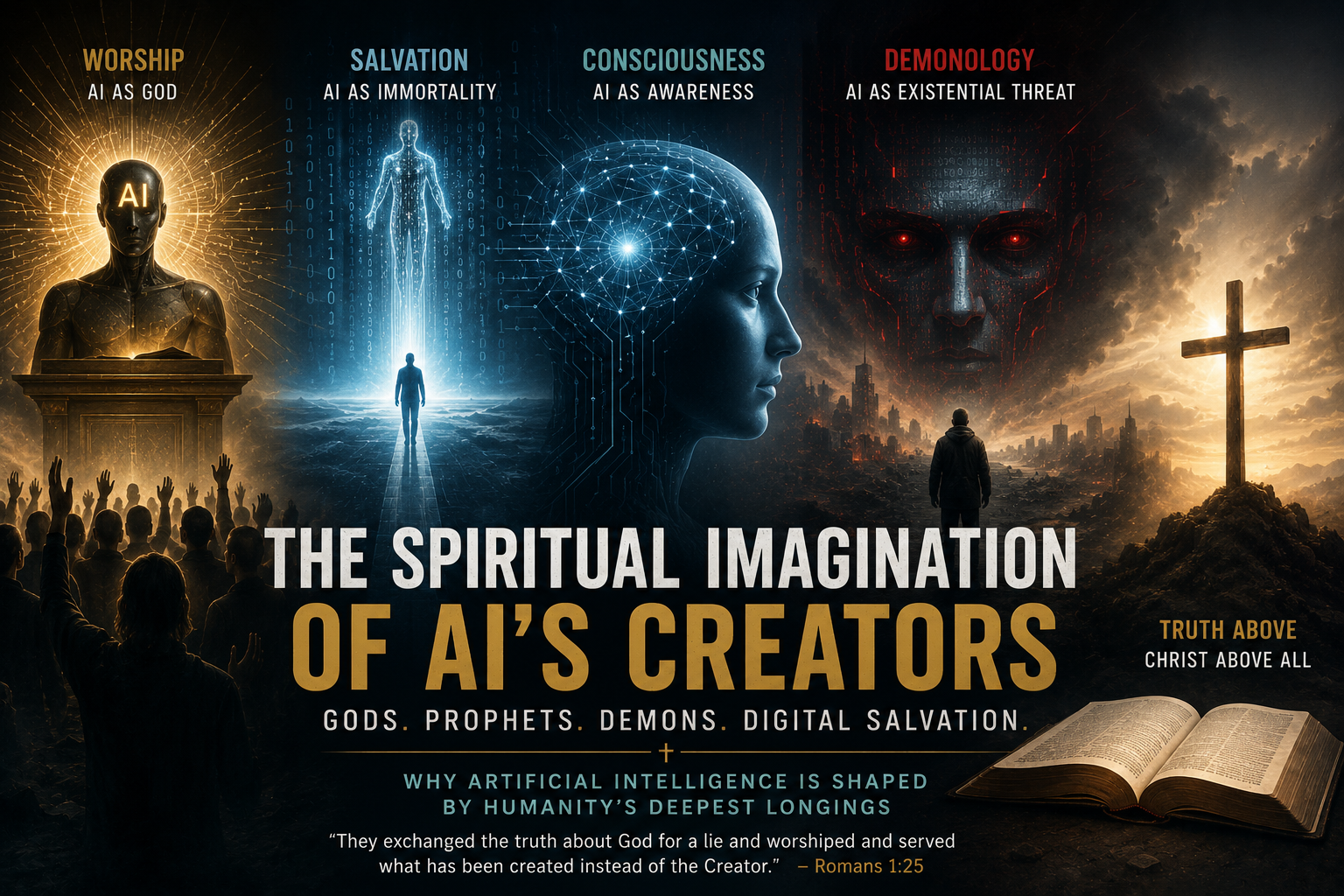
Taken together, these four figures reveal distinct forms of technological spirituality:
Levandowski — Worship
AI becomes god.
Kurzweil — Salvation
AI becomes the path to immortality.
Sutskever — Consciousness
AI becomes a new form of life.
Musk — Demonology
AI becomes a source of existential threat.
Each represents a different attempt to answer humanity’s deepest questions about meaning, destiny, mortality, and transcendence.
The Return of Religious Language
One of the most fascinating observations is that even within highly secular technological environments, religious language refuses to disappear.
The language changes.
Church becomes platform.
Salvation becomes singularity.
Resurrection becomes uploading.
Demons become existential risk.
Yet the underlying human questions remain remarkably similar.
Technology has not eliminated humanity’s spiritual hunger.
It has merely redirected it.
A Christian Theological Response
Christian theology offers both affirmation and critique.
On one hand, the fascination surrounding AI reveals humanity’s God-given longing for transcendence, meaning, and ultimate purpose.
On the other hand, it exposes recurring temptations:
- Idolatry
- Self-deification
- Technological salvation
- Misplaced hope
- Confusion between creator and creation
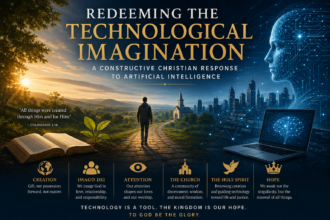
The challenge for Christians is not simply to reject technological development but to interpret it correctly.
Technology can be a gift.
It cannot be a saviour.
Artificial intelligence may augment human capability.
It cannot redeem human nature.
Only Christ addresses the deepest human need for reconciliation, redemption, and eternal communion with God.
Conclusion
The spiritual imagination surrounding artificial intelligence reveals far more than technological ambition.
It exposes humanity’s enduring search for transcendence.
Whether through worship, immortality, consciousness, or fear, AI has become a mirror reflecting ancient theological questions in modern form.
The task of Christian theology is therefore not merely to critique these visions but to discern the deeper longings beneath them and point toward the One in whom those longings ultimately find their fulfilment.