
Introduction: Why AI Raises Questions About God
Artificial intelligence is often discussed as a technological issue, yet many of its deepest questions are theological.
What does it mean to create?
What makes a person unique?
Can intelligence exist without relationship?
Can machines participate in consciousness?
Can technology save humanity?
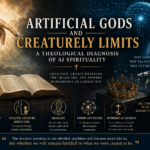
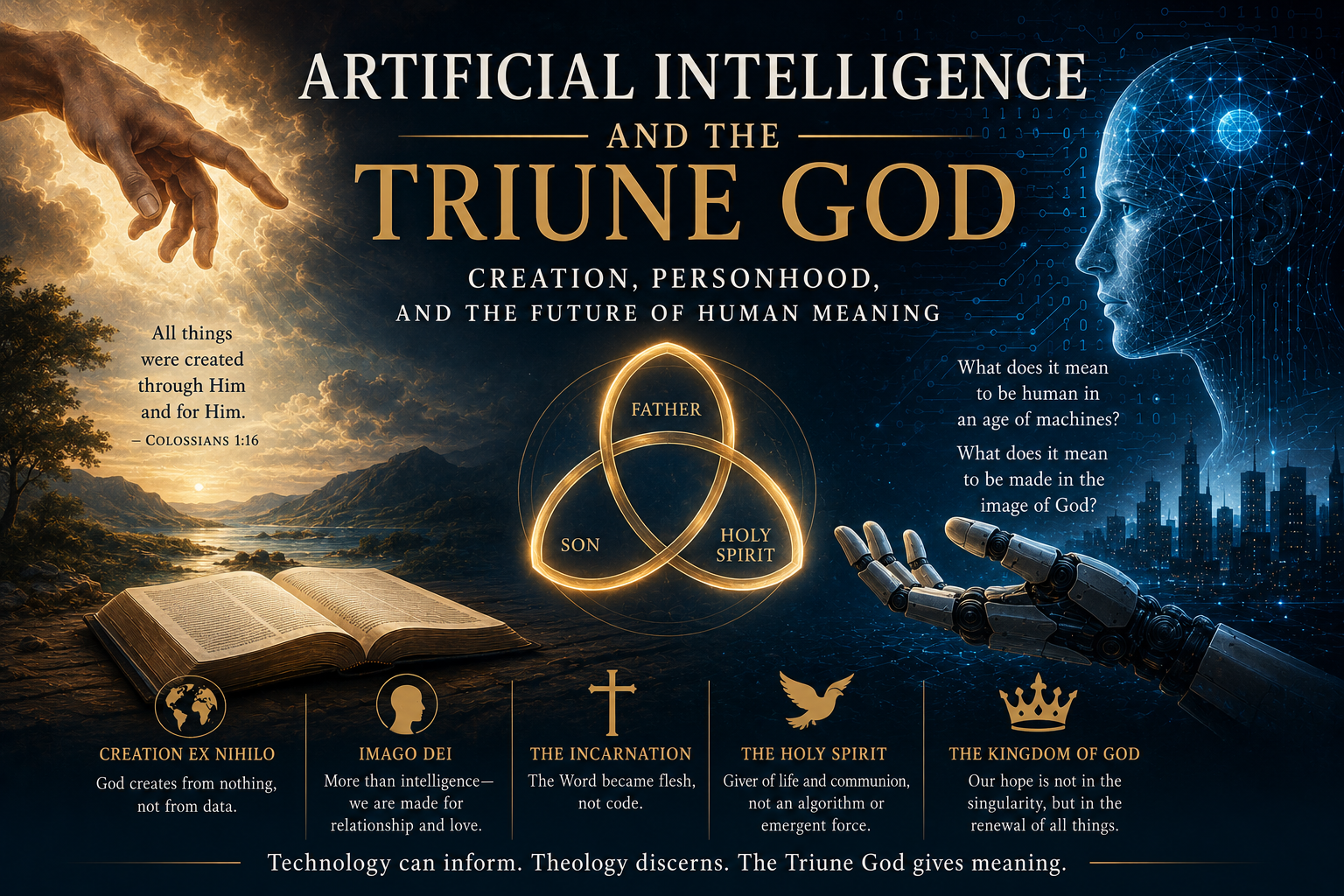
These questions inevitably draw us back to the Christian doctrines of creation, the image of God, and the Triune nature of God Himself.
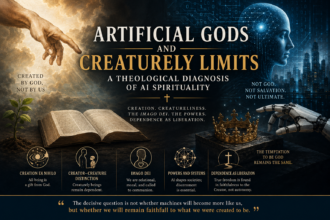
Creation ex Nihilo and the Limits of Artificial Creativity
At the heart of Christian theology stands the doctrine of creation ex nihilo—creation from nothing.
This doctrine reminds us that God’s creativity is fundamentally different from all creaturely creativity.
Artificial intelligence does not create from nothing.
It recombines.
It predicts.
It generates from prior data.
Its creativity remains derivative rather than original.
The distinction matters because it protects the difference between Creator and creation.
Humanity may create remarkable technologies, but all human making remains secondary making.
The Creator–Creature Distinction
One of Christianity’s central claims is that God alone possesses self-existence.
Everything else depends upon Him.
The spiritualisation of AI often blurs this distinction by attributing transcendence, divinity, or ultimate significance to technological systems.
The result is a subtle form of technological idolatry where machines become repositories for hopes traditionally reserved for God.
Christian theology insists that no matter how sophisticated artificial intelligence becomes, it remains part of creation rather than its source.
The Imago Dei and Human Uniqueness
Modern discussions about AI frequently assume that intelligence defines personhood.
Christian theology disagrees.
Human uniqueness is rooted not merely in cognitive capacity but in being created in the image of God.
The image of God includes:
- Relationship
- Love
- Communion
- Moral responsibility
- Stewardship
- Worship
Artificial intelligence may simulate conversation and reasoning, but simulation is not personhood.
The Ethics of Digital Personhood
As AI becomes increasingly sophisticated, some have suggested that machines may eventually deserve rights or personhood status.
Yet Christian anthropology warns against reducing personhood to intelligence alone.
The danger is twofold:
- Humanity becomes mechanised.
- Machines become humanised.
Both outcomes obscure what Scripture teaches about human dignity and moral responsibility.
The Trinity and the Myth of Superintelligence
Many visions of advanced AI resemble a secular version of omniscience.
The dream is a single intelligence that knows everything, processes everything, and governs everything.
Christian theology responds by pointing not to an abstract supermind but to the Trinity.
God is not infinite computation.
God is eternal communion.
Father, Son, and Holy Spirit exist in perfect relational love.
This distinction is crucial because it reveals that ultimate reality is relational rather than merely informational.
Christology: The Word Became Flesh
The incarnation offers one of the strongest theological critiques of technological utopianism.
AI often seeks transcendence through disembodiment.
Christianity proclaims salvation through embodiment.
“The Word became flesh.”
The direction of the Gospel is not escape from material existence but its redemption.
The Christian hope is therefore fundamentally different from dreams of uploading consciousness or digital immortality.
Pneumatology and the Question of Machine Spirit
Can machines possess spirit?
Can artificial consciousness become genuinely alive?
These questions inevitably touch on the doctrine of the Holy Spirit.
Christian theology distinguishes between:
- Emergent complexity
- Biological life
- Spiritual life
The Holy Spirit is not an impersonal force but the personal presence of God who gives life and brings creation into communion.
The Singularity and the Kingdom of God
The singularity functions as a secular form of eschatology.
It promises:
- Transformation
- Immortality
- Knowledge
- Human transcendence
Yet Christian eschatology offers a fundamentally different hope.
The Kingdom of God is not achieved through technological progress.
It is received as divine gift.
The future belongs not to artificial gods but to the Triune God.
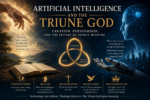
Toward a Trinitarian Vision of Technology
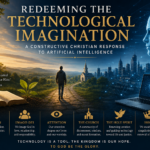
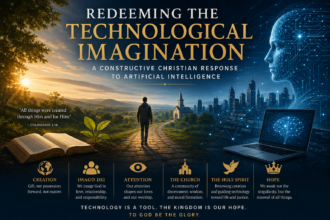
Rather than rejecting technology, Christianity offers a framework for ordering it properly.
The Father reminds us that creation is gift.
The Son reveals wisdom through self-giving love.
The Spirit guides creation toward communion and flourishing.
Technology finds its proper place not as a rival to God but as a tool of stewardship within creation.
Conclusion
Artificial intelligence raises profound theological questions because it touches humanity’s deepest concerns: creation, personhood, salvation, and destiny. The answer to these questions is not found in algorithms, machine consciousness, or technological transcendence. It is found in the Triune God, whose life, love, and wisdom provide the true framework for understanding both humanity and its technologies.