The Spirit Denied
The Christian faith is fundamentally Trinitarian.
To speak rightly of God is to speak of:
- the Father who sends,
- the Son who redeems,
- and the Holy Spirit who indwells, empowers, sanctifies, and sustains the Church.
Yet within certain strands of evangelical Protestantism — particularly those shaped by cessationism — there exists a persistent suspicion toward the ongoing operation of the Spirit’s gifts, especially prophecy, healing, and revelatory ministry.
This article argues that such denial is not merely a secondary doctrinal disagreement.
Rather, cessationism unintentionally mirrors some of the most dangerous Christological distortions in church history by functionally denying the Spirit’s ongoing agency in the life of the Church.
A Crisis of the Third Person
The article describes cessationism as a “theological distortion” that fractures the work of the Trinity in practice.
Like:
- Docetism, which denied Christ’s true humanity,
- or Nestorianism, which divided Christ’s natures,
cessationism divides Word and Spirit, reducing the Church to an institution sustained primarily by memory rather than living presence.
The result is a Church expected to:
- preach without prophetic empowerment,
- minister without supernatural dependence,
- and pursue mission largely through human strength.
The Reformed Tradition and the Holy Spirit
Contrary to common assumptions, historic Reformed theology was not inherently cessationist.
John Calvin himself was known as “the theologian of the Holy Spirit.”
In the Institutes, Calvin insists that without the Spirit:
“the preaching of the gospel would be in vain.”
The article highlights a key Reformed principle:
The Word and the Spirit are inseparable.
Historic Reformed theology affirmed:
- regeneration through the Spirit,
- sanctification,
- empowerment,
- indwelling,
- and the operation of spiritual gifts for the edification of the Church.
Importantly, the article argues that there is no confessional necessity requiring cessationism within the Reformed tradition itself.
The Rise of Cessationism
While skepticism toward miraculous gifts appeared in parts of church history, modern doctrinal cessationism became systematised primarily through B.B. Warfield’s influential 1918 work Counterfeit Miracles.
Warfield argued that miraculous gifts ceased with the apostles and the closing of the biblical canon.
The article contends, however, that this framework emerged partly from:
- Enlightenment rationalism,
- reactions against revivalism,
- and fears of doctrinal instability.
This produced what the article calls a false dichotomy between Scripture and Spirit.
Cessationism as Functional Docetism
Docetism denied the genuine humanity and embodied presence of Christ.
The article argues that cessationism commits a parallel error:
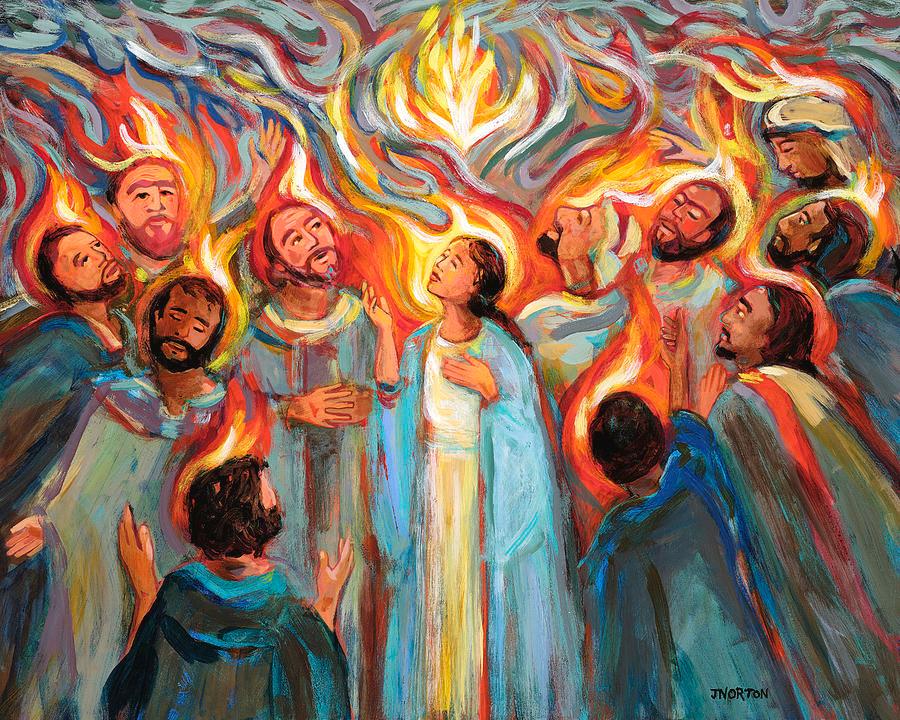
it affirms the historical reality of Pentecost while denying its continuation in the present Church.
As the paper strikingly states:
“The Church becomes a body animated by memory, not by presence.”
The result is a Christianity that:
- quotes Christ,
- preaches about the Spirit,
- but often expects little direct empowerment or manifestation from God in the present.
The article further argues that denying spiritual gifts strips the Church of her incarnational vitality, reducing her to what it calls a “doctrinal corpse.”
Pneumatological Nestorianism
Nestorianism divided what the Incarnation united.
Similarly, cessationism divides Word and Spirit:
- affirming the Spirit’s role in inspiration,
- while denying His ongoing role in empowerment, guidance, and gifting.
Yet Scripture consistently presents the Spirit as:
- guiding the Church,
- empowering witness,
- distributing gifts,
- and actively ministering among believers.
The article argues that cessationism risks creating a quasi-deistic Christianity:
a faith where God spoke powerfully in the past, but remains largely silent in the present.
Scripture and the Spirit
One of the paper’s central arguments is that continuationism does not undermine sola Scriptura.
New Testament prophecy, the article notes, was never treated as equal to canonical Scripture. Rather, it was:
- tested,
- weighed,
- and submitted to biblical authority.
The issue is therefore not Scripture versus Spirit.
The issue is whether Scripture itself teaches the ongoing operation of the Spirit within the Church.
The article argues that demanding the Church operate solely through doctrinal recitation without spiritual empowerment is like:
“asking a man to read blueprints without ever building the house.”
The Missional Consequences
The article contends that cessationism produces a Church that:
- preaches but cannot pierce,
- quotes Scripture but lacks prophetic edge,
- and ministers without experiential power.
By contrast, the rapid growth of Pentecostal and Charismatic Christianity — especially throughout the Global South — demonstrates the missional vitality of a “whole-Bible, whole-Spirit theology.”
The danger of cessationism, the article argues, is that the Church risks becoming:
“a museum of orthodoxy, where doctrine is preserved but power is absent.”
Toward a Reformed Pneumatological Renewal
The conclusion calls for a renewed Reformed pneumatology:
one that holds together:
- the sufficiency of Scripture,
- the authority of Christ,
- and the ongoing empowerment of the Holy Spirit.
Such renewal would seek:
- theological depth,
- spiritual vitality,
- experiential obedience,
- and renewed expectation of God’s active presence within the Church today.
As Calvin himself stated:
“To make the Word fruitful, the secret energy of the Spirit is required.”
Without the Spirit, Christianity risks becoming mere form.
With Him, the Church encounters the living Christ:
still speaking,
still empowering,
and still building His Church.
Author Box
Brendon Naicker is a theologian, author, and teacher whose work explores systematic theology, pneumatology, church history, and the intersection of doctrine and spiritual formation. His writing frequently engages questions surrounding the Holy Spirit, Reformed theology, revival, and the contemporary life of the Church.