





Introduction
Church governance has evolved significantly over the centuries, shaped by both theological developments and modern legal frameworks. Today, churches operate within increasing regulatory expectations regarding financial accountability, safeguarding, and organisational transparency.
While these systems provide necessary protection and oversight, they can also create tension with the spiritual identity of the Church as a living body rather than merely an institution.
This paper explores the relationship between governance, generosity, stewardship, and discipleship, arguing that true Christian community is ultimately revealed through sacrificial generosity and shared responsibility rooted in the Gospel.
The Historical Development of Church Governance
The early church model was deeply communal in nature.
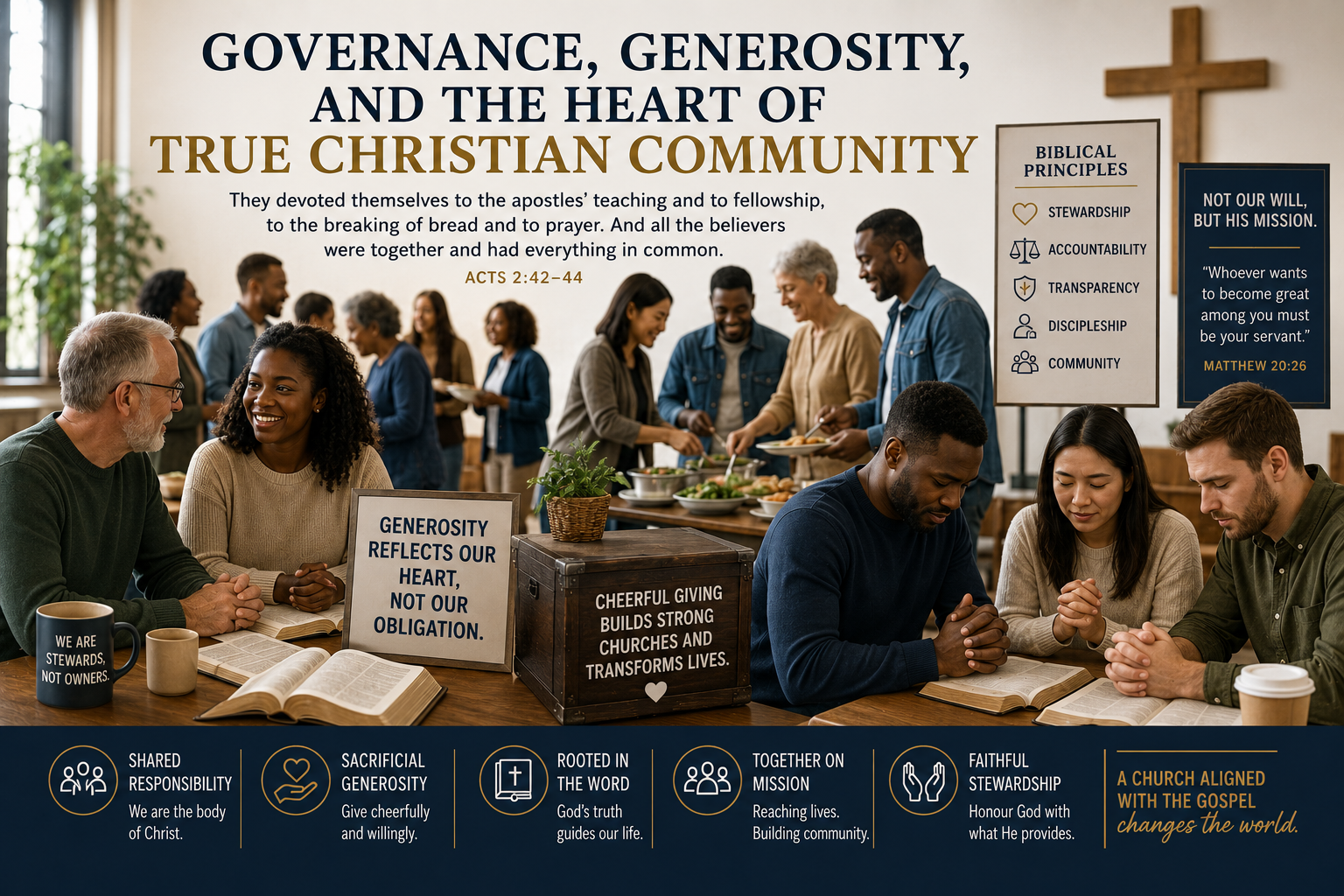
Acts 2 describes believers sharing resources, supporting one another, and living with collective responsibility:
“All who believed were together and had all things in common.”
This spirit of generosity reflected the heart of the Gospel and formed part of the church’s witness to the world.
During the Reformation, governance structures increasingly emphasised the priesthood of all believers and congregational involvement in church life. However, modern churches now often adopt corporate-style governance models in order to comply with legal and regulatory requirements.
Generosity as a Spiritual Indicator
Jesus taught that where a person’s treasure is, their heart will also be found.
Generosity is therefore not simply a financial matter but a spiritual reflection of one’s priorities, discipleship, and commitment to God’s mission.
The article argues that when churches rely upon manipulation, guilt, or coercion to encourage giving, they undermine the spiritual nature of generosity itself.
True giving flows from:
- Gratitude
- Gospel transformation
- Stewardship
- Love for God
- Commitment to community
rather than institutional pressure.
The Church as a Spiritual Community
A healthy church is more than an organisation.
It is a spiritual family marked by:
- Shared responsibility
- Hospitality
- Generosity
- Mutual care
- Sacrificial service
The early church model demonstrates that communal generosity was not optional but central to Christian identity.
When these characteristics disappear, churches risk becoming little more than religious businesses or social institutions detached from the heart of the Gospel.
The Challenges of Modern Individualism
Modern society increasingly promotes:
- Consumerism
- Personal success
- Individualism
- Material accumulation
- Self-centred living
These cultural pressures often make generosity and communal responsibility more difficult to cultivate within church communities.
In such environments, giving becomes a discipleship issue rather than merely a financial discussion.
Churches must intentionally teach stewardship and model sacrificial living that aligns believers’ priorities with the Kingdom of God.
Navigating Regulatory Oversight
Regulatory bodies such as the UK Charity Commission play an important role in ensuring accountability, transparency, and safeguarding within churches.
However, tensions can emerge when institutional compliance begins to overshadow spiritual vitality or when churches prioritise organisational survival over Gospel mission and hospitality.
The challenge for modern churches is to maintain faithful stewardship while preserving their identity as spiritual communities rooted in grace, generosity, and discipleship.
Recovering the Heart of the Church
The article ultimately argues that the health of a church cannot simply be measured through:
- Budgets
- Buildings
- Attendance figures
- Institutional growth
but through the spiritual maturity and generosity of its people.
A church that reflects the Gospel will naturally cultivate:
- Cheerful generosity
- Shared responsibility
- Hospitality
- Compassion
- Community-centred living
These qualities reveal a people shaped not by cultural individualism but by the Kingdom of God.
Conclusion
The true church is defined not merely by governance structures or institutional compliance but by spiritual vitality, discipleship, and generosity.
In a culture increasingly shaped by consumerism and self-interest, churches are called to recover the biblical vision of community, stewardship, and sacrificial living.
When generosity flows naturally from transformed hearts, the Church becomes a visible expression of the Gospel itself.