





How Pastors Mistake Ministry for Monarchy
Introduction
Modern culture has deeply influenced contemporary church leadership. Consumerism, individualism, celebrity culture, and the pursuit of influence increasingly shape how ministry is perceived and practised within many churches.
This paper examines the growing tension between biblical leadership and modern cultural expectations, challenging the dangerous misconception that ministry exists as a personal kingdom to be ruled, inherited, or controlled for self-interest.
Ministry as Stewardship, Not Ownership
One of the greatest distortions within modern ministry is the belief that church leadership functions as private ownership rather than sacred stewardship.
In a culture obsessed with branding, legacy, and personal influence, some leaders begin to treat ministry as though it belongs to them or their families. This mindset mirrors corporate empire-building far more than the Kingdom of God.
The biblical model of leadership stands in direct contrast to this mentality.
Jesus declared:
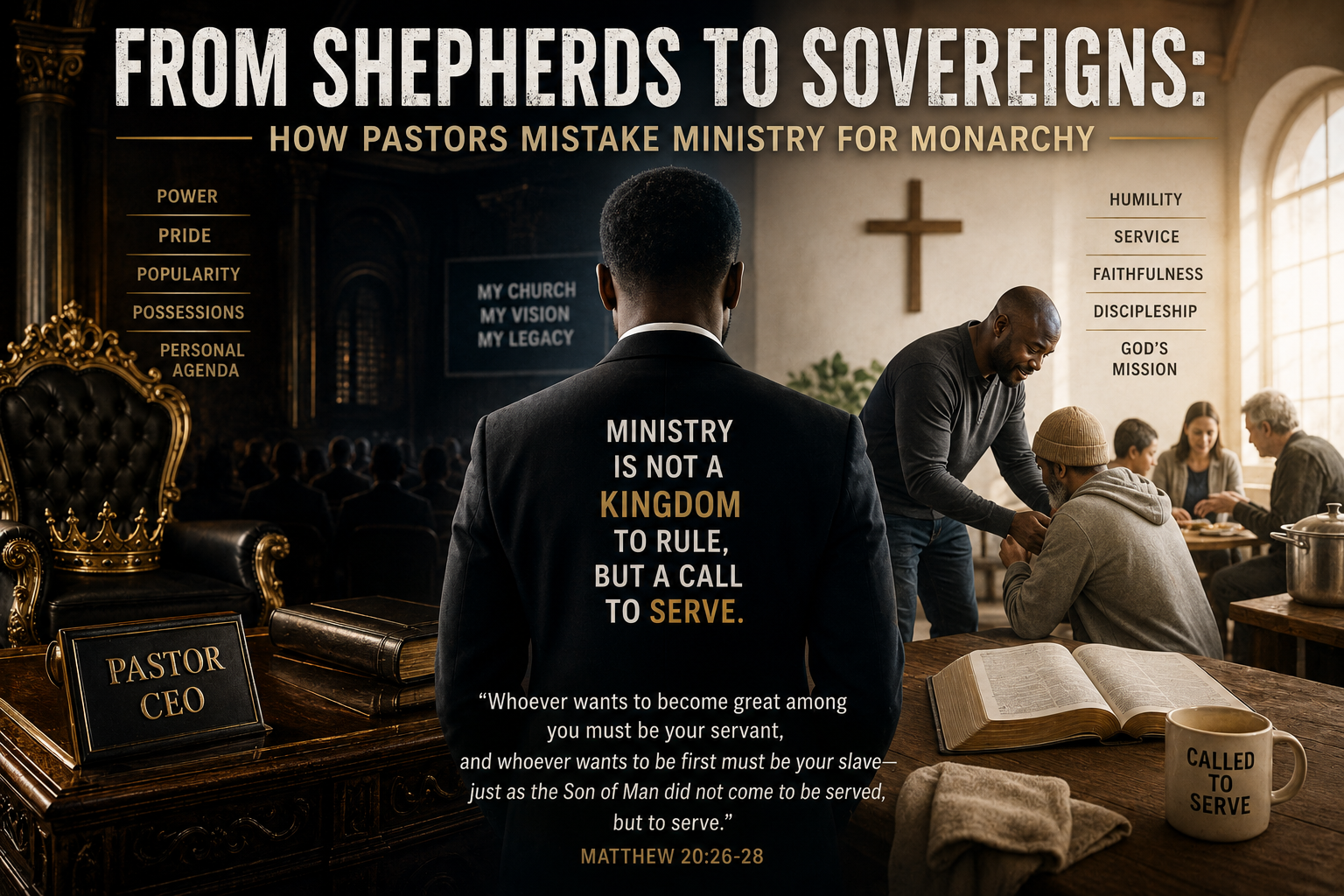
“Whoever wants to become great among you must be your servant.”
— Matthew 20:26–28
Christian leadership is rooted in humility, sacrifice, and service — not personal control or dynastic succession.
Accountability and Church Governance
Modern legal frameworks increasingly reinforce the principle that churches are public trusts rather than personal possessions.
Regulations such as the UK Charities Act 2011 emphasise accountability, transparency, and governance structures designed to protect communities from abuse or misuse of authority.
Yet the need for such oversight also exposes a deeper issue: the failure of many churches to maintain biblical accountability internally.
True church governance must reflect the authority of Christ rather than the ambitions of individuals.
The Influence of Consumerism
Consumer culture has radically reshaped modern perceptions of church success.
Many ministries increasingly measure effectiveness through:
- Attendance numbers
- Revenue growth
- Social media visibility
- Branding and popularity
- Platform influence
This approach risks reducing the church to a business model rather than a spiritual community shaped by discipleship and transformation.
Tim Keller warned that success itself can become an idol when leaders prioritise visible achievements over the hidden work of God within people’s lives.
When Leadership Becomes Performance
Modern culture often elevates charisma, image, and influence above spiritual maturity.
As a result, pastors can become pressured to function as:
- CEOs
- Influencers
- Performers
- Brand managers
- Public personalities
rather than shepherds of God’s people.
Eugene Peterson famously warned that pastoral ministry is not a performance but a sacred calling rooted in integrity, transparency, and faithful presence among people.
The danger is that churches may begin selecting leaders according to worldly success metrics rather than biblical character.
The Problem with Popularity-Driven Leadership
Biblical leadership is not a popularity contest.
The Apostle Paul wrote:
“Am I now trying to win the approval of human beings, or of God?”
— Galatians 1:10
Churches shaped primarily by public opinion or congregational pressure may slowly compromise spiritual conviction in favour of maintaining comfort, growth, or popularity.
Leadership within the Church must remain rooted in spiritual discernment rather than cultural trends or majority preference.
Servanthood Over Legacy-Building
Modern culture celebrates personal legacy, influence, and recognition. Yet the Kingdom of God defines greatness very differently.
Henri Nouwen argued that the future Christian leader would not be marked by relevance or celebrity, but by humility, solidarity, and faithfulness to Christ.
The true legacy of a pastor is not measured by wealth, buildings, or reputation, but by:
- Faithfulness to Christ
- Discipleship
- Spiritual integrity
- Servanthood
- Kingdom impact
Leaders who seek to build God’s Kingdom rather than their own reputation leave behind an eternal legacy.
A Kingdom Perspective
The temptation to build personal empires has become one of the defining spiritual dangers of modern ministry.
Charles Spurgeon warned:
“Ministers are not to build their own empire but to advance the Kingdom of God.”
A.W. Tozer similarly cautioned against churches embracing the spirit of the age rather than remaining faithful to eternal truth.
Pastors are called to resist cultural pressures and remain faithful shepherds who equip, serve, disciple, and lead under the authority of Christ.
Conclusion
Modern church leadership faces enormous pressure from consumerism, individualism, celebrity culture, and worldly definitions of success.
Yet Scripture consistently calls pastors back to humility, servanthood, accountability, and spiritual faithfulness.
The role of a pastor is not to build a personal kingdom but to steward God’s people faithfully under Christ’s authority.